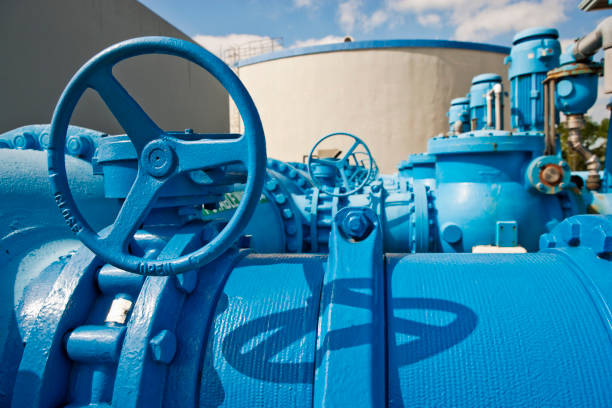
STP technology has turned into a foundation in the field of wastewater the executives. With expanding natural worries and the requirement for supportable arrangements, STP technology gives an effective and eco-accommodating way to deal with treat sewage and wastewater, guaranteeing that water assets are overseen capably. This article investigates the different parts of STP technology, its parts, and its job in present day wastewater treatment frameworks.
What is STP Technology?
STP technology alludes to the techniques and cycles utilized in sewage treatment plants (STPs) to treat wastewater before it is released or reused. The technology includes different phases of treatment, each intended to eliminate explicit foreign substances and work on the nature of the water. Present day STP technology coordinates progressed treatment strategies, mechanization, and energy productivity to make a feasible answer for taking care of wastewater in metropolitan and modern settings.
Key Parts of STP Technology
Screening and Pre-Treatment
The underlying phase of STP technology includes the screening of wastewater to eliminate huge flotsam and jetsam like plastics, leaves, and other strong waste. This guarantees that the resulting treatment processes are not hindered by enormous particles.
Essential Treatment
In the essential treatment stage, strong waste settles at the lower part of the treatment tank, while lighter substances, for example, oils and oil float to the surface. The wastewater is then isolated from these materials, prepared for additional treatment.
Optional Treatment (Organic Treatment)
The optional treatment process uses natural cycles to separate natural matter in the wastewater. This normally includes bringing microorganisms into the framework that consume the natural poisons. The most well-known optional treatment techniques incorporate actuated slop frameworks, streaming channels, and film bioreactors (MBR).
Tertiary Treatment (High level Treatment)
Tertiary treatment is the last step, where water goes through additional sanitization to eliminate any leftover pollutants. This can incorporate compound treatments, filtration, and ultraviolet (UV) sanitization. The objective is to guarantee that the water is ok for reuse or release into the climate.
Ooze Treatment and Removal
Ooze, which aggregates from the wastewater treatment process, is additionally treated in STPs. Advances like anaerobic processing, slime drying, and treating the soil are utilized to oversee and discard ooze in a harmless to the ecosystem way.
Kinds of STP Technology
A few kinds of STP technology are accessible, each fit to various sizes of activity and natural necessities:
Activated Sludge Process (ASP)
The initiated slime process is one of the most broadly utilized natural treatment strategies. It utilizes air circulation tanks where air is siphoned into the water to invigorate the development of microorganisms that separate natural waste.
Membrane Bioreactor (MBR)
The MBR cycle joins organic treatment and film filtration to create excellent emanating. This technology is more smaller and effective than customary strategies, making it ideal for space-obliged regions.
Moving Bed Biofilm Reactor (MBBR)
The MBBR is another natural treatment process that utilizes biofilm-covered plastic media to help the development of microorganisms. The media moves openly in the air circulation tank, giving more surface region to the microbes to develop and deteriorate natural matter.
Sequencing Batch Reactor (SBR)
The SBR technology includes the cluster handling of wastewater in a solitary reactor tank. The interaction is cyclic, with each cycle comprising of filling, air circulation, settling, and emptying stages. SBR frameworks are powerful for treating high-strength wastewater.
Developed Wetlands
This nature-based arrangement utilizes plants and soil to treat wastewater. Developed wetlands are especially helpful in limited scope or country applications and proposition a minimal expense, supportable treatment technique.
Advantages of STP Technology
Water Preservation and Reuse
Current STP technology makes it conceivable to treat and reuse wastewater for non-consumable applications, for example, water system, scene watering, and modern cycles. This essentially decreases the interest for freshwater assets, adding to water preservation endeavors.
Ecological Security
By treating wastewater before it is released into the climate, STP technology assists with forestalling contamination of normal water bodies. This safeguards amphibian biological systems and works on the general nature of water in streams, lakes, and seas.
Administrative Consistence
Numerous districts have severe guidelines administering the release of wastewater. STP technology guarantees that treated water meets or surpasses these natural principles, permitting enterprises, districts, and private buildings to stay consistent with nearby regulations.
Cost-Viability
With the headway of STP technology, the expense of establishment and activity has diminished, making these frameworks more reasonable for both huge scope ventures and more modest networks. Furthermore, the reuse of treated water decreases water bills.
Energy Proficiency
More up to date STP frameworks integrate energy-proficient advancements, like low-power air circulation frameworks, energy recuperation components, and computerized checking. These headways diminish functional expenses and the carbon impression of treatment plants.
Picking the Right STP Technology for Your Necessities
While choosing STP technology, taking into account a few factors is fundamental:
Scale and Limit
Pick a framework that is suitably estimated for the volume of wastewater produced. Private structures, business foundations, and modern locales will have different treatment needs, which ought to be met by the right technology.
Treatment Productivity
Assess the presentation of various STP advances regarding the nature of treated water. A few frameworks give progressed filtration and sanitization processes that can create top notch emanating reasonable for reuse.
Space and Establishment Necessities
Contingent upon the accessible space, pick a minimal or measured STP technology. A few frameworks, like MBR, are great for more modest spaces, while others might require bigger regions.
Upkeep and Backing
Consider the upkeep needs of the framework. Some STP advancements are more computerized, requiring less manual intercession, while others could require continuous checking and upkeep.
End
STP technology is a fundamental piece of current wastewater treatment arrangements, giving compelling, effective, and practical strategies for overseeing sewage. With different treatment techniques and advancements accessible, picking the right situation for your particular needs is significant. Whether for private, business, or modern applications, STP technology guarantees that wastewater is blessed to receive satisfy ecological guidelines, moderating water assets and safeguarding the climate. Putting resources into the right STP technology can prompt long haul cost investment funds, administrative consistence, and a cleaner, better planet.