
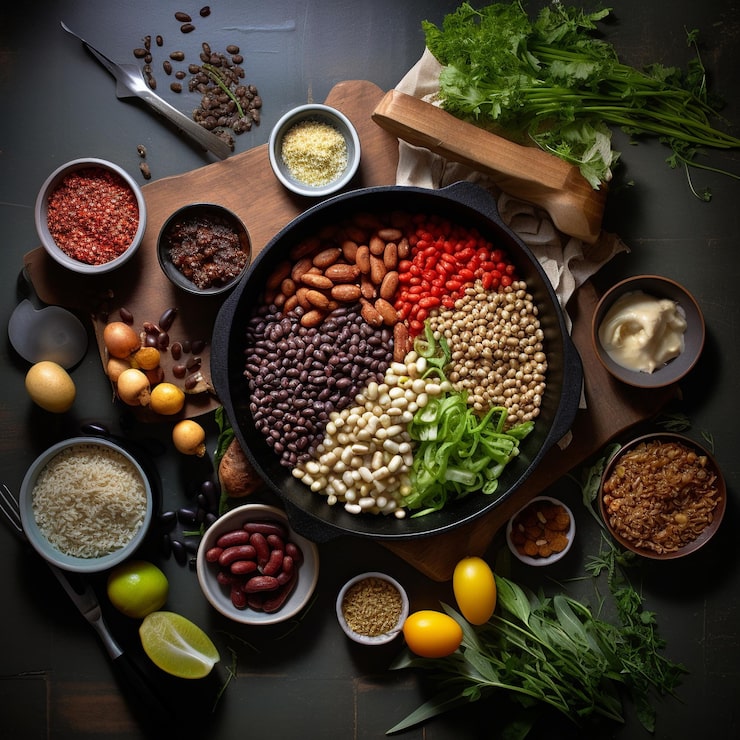
Think back to the food you grew up eating at your nani’s or dadi’s house. Thick dal with a spoon of ghee, a glass of chaas after lunch, besan laddoos in a steel dabba, roasted chana in the evening. Nobody counted macros. Nobody owned a shaker bottle. Yet those meals kept entire households strong, and a lot of the wisdom behind them holds up very well against modern nutrition science.
Somewhere along the way, protein became something that comes in a tub with a scoop. This article is a gentle push in the other direction. We’ll look at old kitchen habits, why they work, and how to fit them into a life that has less time than your grandmother had. If you’ve been wondering whether desi protein foods can really keep up with the packaged stuff, the short answer is yes, with a little planning.
Why Traditional Pairings Work So Well
Most Indian meals follow a pattern: a grain, a pulse, a dairy item, and some vegetables. That isn’t an accident. Grains like rice and wheat are low in an amino acid called lysine, while pulses are rich in it. Pulses, on the other hand, are lower in methionine, which grains have plenty of. Put them together and the gaps fill in.
So dal-chawal, rajma-chawal, kadhi with roti, and khichdi are all classic examples of complementary proteins. They weren’t designed by a nutritionist, they were refined over centuries by people who noticed what made them feel strong and full.
Add curd or chaas on the side and you’re also getting extra high-quality protein, calcium, and live cultures for your gut.
Sattu: The Old Workhorse
Sattu is roasted gram flour, and it deserves far more fame than it gets. In Bihar, Jharkhand, and eastern Uttar Pradesh, farmers and labourers have eaten it for generations because it’s cheap, filling, and gives lasting energy. A 100-gram portion carries around 20 grams of protein, plus fibre and iron.
You can take it a few ways:
- Stir two tablespoons into a glass of cold water with salt, lemon, and roasted jeera.
- Stuff it into litti or parathas with ajwain, onion, and green chilli.
- Whisk it into buttermilk for a quick, cooling drink.
- Mix it with jaggery and ghee into small laddoos for a travel snack.
Start with a small amount because the fibre is high, and your stomach may need a few days to adjust.
Besan, Moong, and the Humble Cheela
If there’s one breakfast that shows how smart Indian cooking can be, it’s the cheela. Besan (chickpea flour) or ground moong dal gets mixed with water, spices, and chopped vegetables, then cooked on a tawa like a savoury pancake. Two medium cheelas give you roughly 12 to 15 grams of protein, with hardly any effort.
Dosa and idli have a similar story. The batter for both is made from rice and urad dal, which is then fermented overnight. Fermentation improves digestibility and makes some nutrients easier to absorb. Adding a bowl of sambar, which is dal-based, lifts the total protein of a south Indian breakfast quite a bit, and a side of peanut chutney lifts it more.
Dhokla, handvo, and thalipeeth from Gujarat and Maharashtra are other good examples. They mix pulses and grains in a single dish and taste great, which is half the battle.
Dairy as a Daily Habit
Curd, chaas, lassi, paneer, ghee, and milk have sat at the heart of Indian meals for as long as anyone can remember. Homemade curd is cheap and takes almost no work, and if you hang it for a bit, it becomes a thick, spoonable protein source. A bowl with roasted cumin and a pinch of salt is a snack, a side, and a mini-meal rolled into one.
Chaas deserves a special mention. It’s light, hydrating, and easy on the stomach in hot weather, while still giving you a few grams of protein per glass. Fold in a spoon of sattu and it climbs further.
Paneer is the most popular vegetarian protein in many homes. Grilled, crumbled into parathas, or made into a quick bhurji, it brings about 18 grams per 100 grams. If you buy it, check that the packet lists only milk and a souring agent. If you make it at home, save the whey and use it to knead dough or cook dal, so nothing goes to waste.
Pulses Beyond Daily Dal
Dal is the obvious one, but our kitchens have a wider pulse family than most people use. Think of whole moong, kala chana, matki, lobia, horse gram (kulthi), and rajma. Each has its own taste and gives you somewhere between 20 and 25 grams of protein per 100 grams dry.
Sprouting turns many of these into quick, nutritious meals. Soak them overnight, drain, and leave them wrapped in a damp cloth for a day. Toss the sprouts with onion, tomato, lemon, and chaat masala, and you’ve made a snack worth about 10 grams of protein per bowl.
Horse gram in particular has a long tradition in south India and parts of Uttarakhand. Cooked as a soup or a dry stir-fry, it’s earthy, rich in protein, and quite inexpensive.
Nuts, Seeds, and Sweet Treats That Help
Our festival sweets get a bad reputation, but a few of them are protein-friendly when made thoughtfully. Besan laddoo, til chikki, peanut chikki, and dry fruit laddoos made with dates all carry a modest amount of protein from gram flour, sesame, and nuts. Obviously they also come with sugar or jaggery and ghee, so they’re snacks, not staples. A small piece after lunch is fine.
Makhana, or fox nuts, is another good one. Roasted lightly in ghee with black pepper, it makes a crunchy snack with a few grams of protein per serving and very little fat when you go easy on the ghee.
Fitting This Into a Busy Day
Here’s the practical part. Most of us don’t have a household that cooks four hours a day, so the trick is to cut the work without losing the benefit.
- Batch your basics. Cook a large pot of dal or rajma on Sunday and portion it for the next two or three days.
- Keep ready-to-use helpers. Besan, sattu, roasted chana, and soya chunks sit in the cupboard for months.
- Set curd every night. It’s a small ritual, and you’ll always have a protein side available.
- Sprout in bulk. Do a big jar once or twice a week and keep it in the fridge.
- Repeat meals you love. Nobody needs variety every single day. Two or three reliable breakfasts are enough.
A Day of Traditional Eating
To make it concrete, here’s one day.
- Morning: two besan cheelas with mint chutney, plus a glass of milk. Around 20 grams.
- Lunch: two rotis, moong dal, lauki sabzi, and curd. Around 22 grams.
- Evening: sattu drink and a handful of roasted chana. Around 15 grams.
- Dinner: rajma-chawal with salad and a bowl of raita. Around 22 grams.
That adds up to nearly 80 grams, without a supplement in sight. If you’re lighter or less active, you’d need less. If you train hard, add an egg or a portion of paneer or soya.
A Fair Word on Limits
Traditional food is wonderful, but let’s be honest. Some home meals lean heavily on rice and roti with a small spoonful of dal, which leaves protein on the low side. Fried snacks and sweets can crowd out the better stuff. The aim isn’t to romanticise the past. It’s to take what worked, such as pulse and grain pairings, dairy, fermented batters, and sprouts, and give it a bigger share of the plate.
If you have a medical condition, are pregnant, or train at a high level, a registered dietitian can tailor things properly. Food-first doesn’t mean food-only for everyone.
Regional Treasures Worth Trying
India’s food map is full of protein-rich dishes that never make it onto fitness blogs. A few to look for:
- Kadhi pakora from Punjab and Rajasthan, made with curd and besan.
- Dal baati churma from Rajasthan, where the dal brings the protein and the baati brings the energy.
- Misal pav from Maharashtra, built on a spicy base of sprouted moth beans.
- Pesarattu from Andhra Pradesh, a crisp green moong dosa that’s almost pure protein and fibre.
- Chana ghugni from Bengal and Odisha, a soft, spiced chickpea snack.
Try one new dish a month, and you’ll quickly build a rotation that’s varied and satisfying.
Final Thoughts
You don’t have to choose between modern nutrition and the kitchen you grew up in. The two agree on far more than they argue about. Bring back the cheela, the kadhi, the sprouts, the sattu drink, and the bowl of curd, and you’ll probably find your protein sorted before you’ve even opened a tub. If you’re curious where to begin, pick three desi protein foods you already like and make them a weekly habit. Once those feel easy, add another, because the best desi protein foods are the ones that actually end up on your plate.

