
The factor that most directly shapes whether an older adult thrives — rather than simply copes — is more ordinary than most families expect: whether their days reliably hold small moments of genuine human contact. A morning coffee with a neighbour, a shared meal, an evening walk with a familiar face. These everyday moments play an important role in senior community living environments. However, families rarely think to evaluate them during their first visit.
Researchers who study what separates elders who flourish from those who decline in later life have identified a consistent pattern. It is not primarily the quality of available medical care, though that matters. It is the texture of daily social contact — its frequency, consistency, and how natural it feels. When those conditions are met, something measurable happens to health outcomes, and it starts with something as simple as breakfast with a friend.
What Makes Daily Companionship Such a Powerful Force in Senior Community Living?
The answer lies in what happens biologically when an older adult has regular, low-stakes social contact. Cortisol levels are consistently lower in older adults with daily companionship than in those who are socially isolated. Cardiovascular markers improve. Sleep quality is better. And the immune system responds differently: people with stronger social networks show more robust immune responses and recover faster from common illnesses. These are not small effects — they are clinically significant differences in health trajectory.
Among elderly care homes that understand this, the morning coffee hour is not an optional social activity — it is a designed health outcome. When two residents share breakfast conversations every day without having to plan it, the consistency of that contact builds the kind of social bond that delivers cumulative physiological benefit over months and years. It is regularity that matters most: one stimulating social event per week is not equivalent to fifteen minutes of daily companionship.
How Do Small Shared Moments Build the Habits That Sustain Senior Health?
Habit formation in later life tends to be anchored to other people rather than internal motivation alone. A resident with a standing breakfast table and two familiar neighbours is far more likely to maintain a regular morning routine — which carries its own health benefits — than one who eats alone and must generate energy for each day from scratch. The social anchor becomes a behavioural anchor, quietly sustaining patterns that would otherwise erode without the pull of companionship.
This is why quality old age home kolkata options invest carefully in the design of communal spaces and shared routines. A garden path that two friends walk each evening becomes a health routine sustained not by willpower but by the pleasure of company. A dining room that makes it easy to sit with the same people each morning creates social infrastructure that residents did not have to build themselves — one of the most valuable things a well-designed senior home can offer.
What Role Does the Physical Environment Play in Supporting Daily Connection?
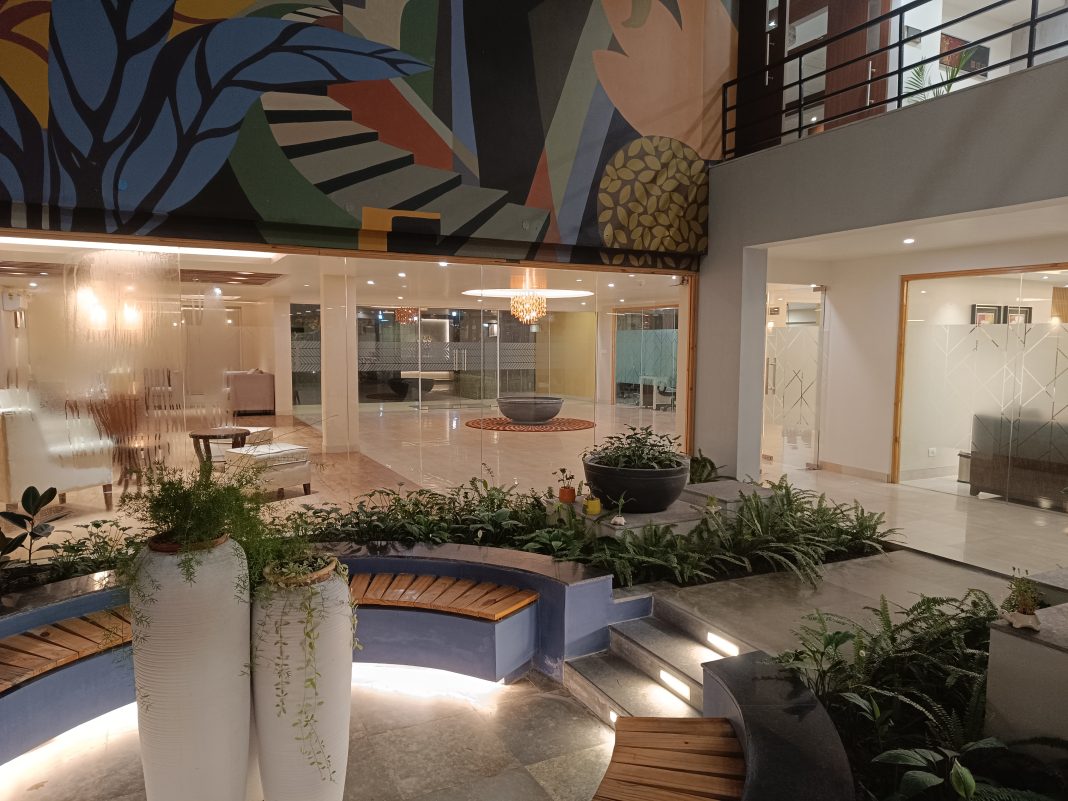
Senior living design has evolved in its understanding of how physical space shapes social behaviour. Communities built around private rooms along long corridors tend to produce isolation even when residents live close together. Communities built around shared transition spaces — a courtyard people pass through, a sitting area at the intersection of walkways, a library adjacent to the dining room — produce spontaneous social contact without requiring anyone to make an effort or a plan.
Families comparing the cost of assisted living facilities often focus on available services, accommodation and care provisions. What is harder to price but easier to feel on a real visit is the social architecture of a community — the degree to which the physical environment makes daily connection the path of least resistance. At Jagriti Dham near Joka, Kolkata, the card room, game room, community hall, library, and garden form a connected daily circuit rather than separate destinations that residents must choose to visit deliberately.
How Does Consistent Companionship Protect Cognitive Health in Later Life?
The cognitive benefits of daily social contact are among the most replicated findings in gerontology. Regular conversation exercises memory, attention, and language processing. It requires older adults to hold a thread of reasoning across an exchange, respond to unexpected statements, and recall details from earlier conversations. These are demanding cognitive tasks that feel effortless in the context of friendship — which is exactly what makes them effective as passive, ongoing cognitive maintenance.
For those exploring homes for elderly people where cognitive health is a priority, the social programme of a community matters more than most families realise. A resident who shares a card game every afternoon with regular partners and debates a news story over morning coffee is doing more for her cognitive longevity than structured brain-training programmes can deliver on their own. The social environment is the cognitive environment in ways that no individual activity can replicate.
What Should Families Ask When Assessing Companionship in a Senior Home?
The most useful question on a visit to any senior living community is not what activities are offered, but whether residents actually know and seek each other out. During a scheduled visit, explore the common areas and dining spaces. Understand how the layout supports everyday social interaction. Ask the team about the social and cultural programmes organised for residents and how these activities contribute to companionship and community life.
For families weighing old age homes in India across quality tiers, Jagriti Dham near Joka is designed to encourage everyday social connections and meaningful companionship among residents. Resident feedback reflects it: one describes the experience as a place where friends make her feel special every morning. For those considering assisted living for elderly people in Kolkata, this depth of daily companionship is the benchmark worth using — not room specifications or facilities lists.
The Ordinary Moments That Make an Extraordinary Difference
What families most often remember from a first visit to a senior home is the room, the staff, and the food. What they rarely measure is the thing that will most directly shape how well their parent thrives there: the daily companionship the community makes possible. Choosing quality senior community living means finding a place that treats the morning coffee hour, the shared garden walk, and the afternoon card game not as extras but as the core of what healthy ageing looks like — day after day. That is the standard Jagriti Dham near Kolkata has built itself around.
Frequently Asked Questions
Q1. Why does everyday companionship matter more than occasional social events for seniors?
Research consistently shows that the health benefits of social connection come from frequency and consistency, not from intensity. Daily low-stakes contact — a shared breakfast, a regular walk — delivers cumulative physiological and cognitive benefits that a single stimulating event per week cannot replicate. Communities that build daily contact into their physical design and daily routines are delivering a measurable health outcome for residents.
Q2. How does Jagriti Dham support everyday companionship for its residents?
Jagriti Dham’s campus near Joka, Kolkata is designed around spaces that make daily social contact a natural part of every resident’s day — a library, card room, game room, community hall, gardens, and connected common areas alongside a full programme of cultural events, wellness sessions, creative workshops, and community celebrations. The environment supports both the morning coffee tradition and the deeper friendships that develop from it over time.
Experience the community life for yourself. Book a scheduled visit at Jagriti Dham near Kolkata.
About Jagriti Dham
This article was curated by the Jagriti Dham team (www.jagritidham.com). Jagriti Dham is Kolkata’s most luxurious senior citizen home and Eastern India’s first IGBC-certified green senior living facility, situated near Joka on Diamond Harbour Road. A project of the Infinity Group, Jagriti Dham promotes active ageing and builds an age-integrated society where elders live independently while receiving the finest professional care.
Follow us: Facebook | YouTube | Google My Business | LinkedIn | Instagram

