
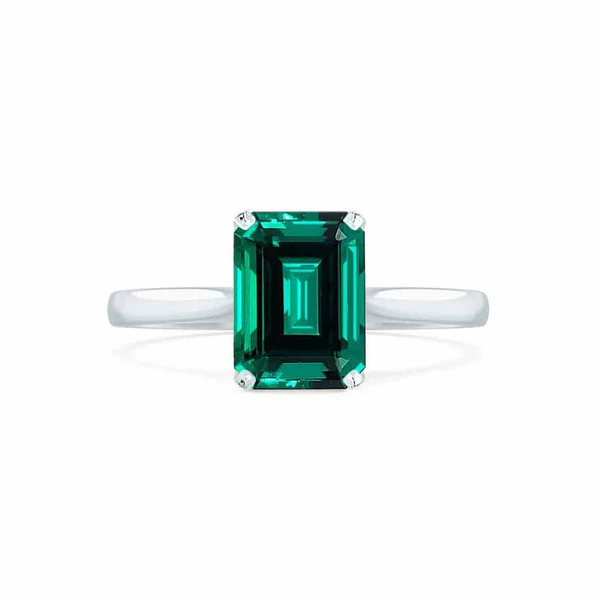
When exploring the world of emerald engagement rings, couples often face the decision of choosing between traditional mined gemstones and modern lab-grown alternatives. This choice involves much more than appearance-it touches on personal values, budget, lifestyle preferences, and environmental concerns. As engagement rings hold emotional significance and symbolize enduring love, understanding the key differences between traditional and lab-grown emeralds can help couples make a meaningful and informed decision.
Emerald engagement rings have long been admired for their enchanting green hue and symbolic associations with renewal, wisdom, and passion. Traditional emeralds are mined from natural deposits found deep within the earth, with Colombia, Zambia, and Brazil being some of the most notable sources. These gemstones are revered for their individuality, often characterized by unique internal inclusions known as jardin. These natural patterns are celebrated by many for giving each stone a distinct identity. However, the mining of emeralds can raise ethical and environmental concerns. In some parts of the world, mining practices may involve exploitative labor conditions or contribute to deforestation and ecological disruption.
Lab-grown emerald engagement rings offer an alternative that is gaining popularity among modern couples. Created in advanced laboratories, these emeralds are cultivated under conditions that replicate the natural formation process. They are physically, chemically, and optically identical to their natural counterparts, making them just as beautiful and durable. One of the most compelling reasons to choose lab-grown emeralds is their ethical and sustainable production. Because they do not require excavation or large-scale mining operations, lab-grown emeralds have a significantly lower environmental impact. Additionally, they are often accompanied by transparent sourcing information, giving couples confidence in the integrity of their purchase.
Affordability is another important factor in the decision-making process. Traditional emeralds, especially those with vibrant color and minimal inclusions, are rare and highly valued, often commanding high prices. In contrast, lab-grown emeralds offer a similar level of beauty and quality at a more accessible cost. This allows couples to either stay within budget or invest in a larger or more intricate ring design. For many, this cost advantage makes lab-grown emeralds an appealing choice without sacrificing style or sentiment.Visit our blog for more My USA Wire.
Durability is also essential to consider. Both traditional and lab-grown emeralds have a hardness rating of 7.5 to 8 on the Mohs scale, making them suitable for everyday wear. However, natural emeralds are often more prone to surface-reaching inclusions, which can make them slightly more fragile. Lab-grown emeralds, on the other hand, can be created with fewer imperfections, potentially offering improved durability for active lifestyles or long-term wear.
Emotional significance, however, often outweighs technical considerations. Some individuals cherish the idea of wearing a gemstone that has taken millions of years to form naturally beneath the earth’s surface. For them, the natural origin of traditional emeralds holds a romantic and historical appeal. Others are drawn to the innovation, precision, and values represented by lab-grown stones. These couples view their ring as a reflection of their commitment to sustainability, ethics, and conscious decision-making.
In the end, choosing between traditional and lab-grown emerald engagement rings is a deeply personal decision. Both options provide lasting beauty, symbolism, and meaning. Whether you value the ancient allure of a mined emerald or the responsible innovation of a lab-created gem, what matters most is selecting a ring that aligns with your values, style, and the love story it’s meant to represent.

